

Introduction
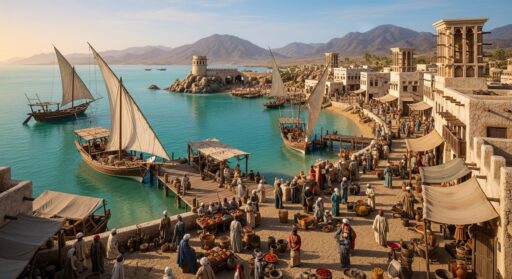
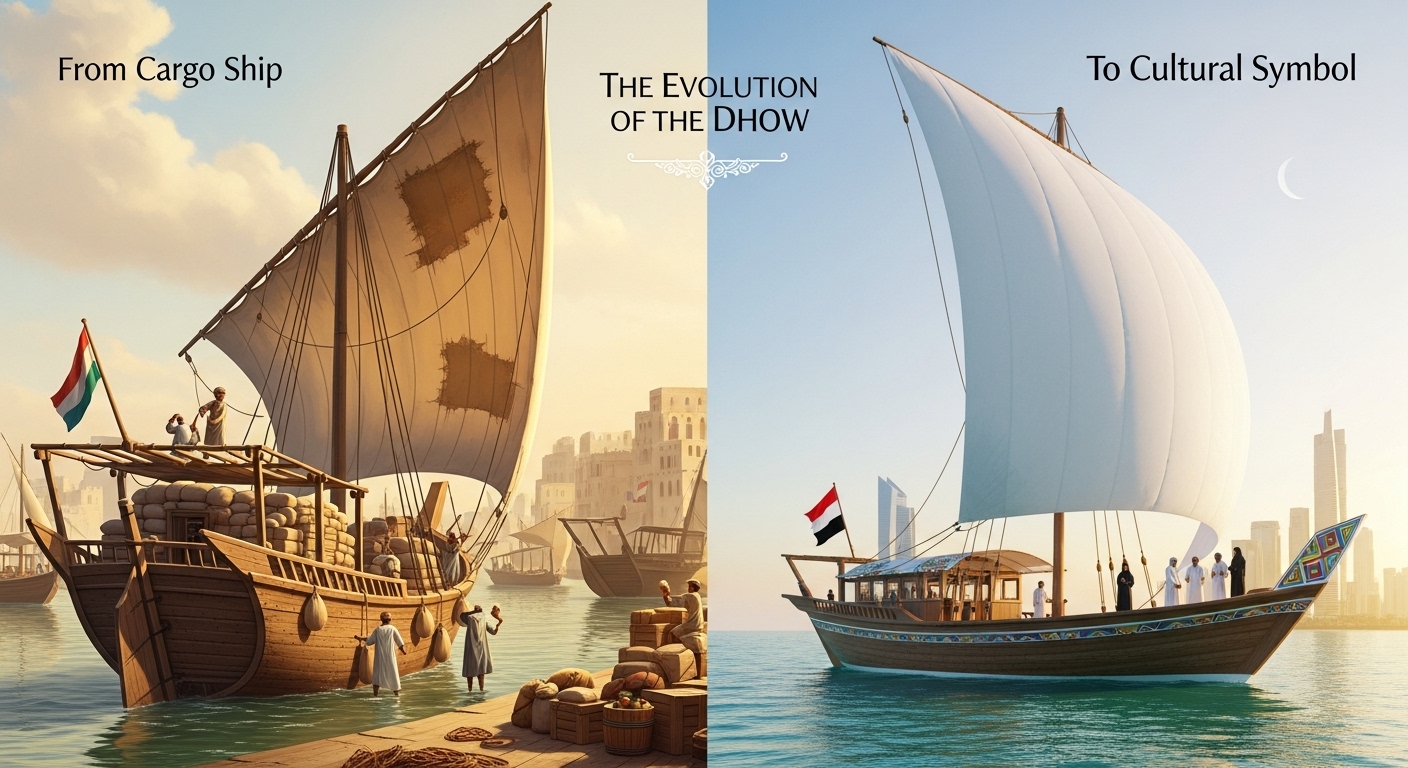
For centuries, the silhouette of the dhow, with its majestic triangular sails, was the defining image of the Arabian Gulf. These wooden vessels were the lifeblood of the region, the engines of the pearling industry, and the vehicles that connected the Trucial Coast to the wider Indian Ocean world. The evolution of the dhow—from a wind-powered cargo ship to a motorized vessel and finally to a cherished cultural symbol—mirrors the dramatic transformation of the UAE itself, from a pastoral and maritime economy to a postmodern global hub.
The Age of Sail: Design and Diversity
The traditional dhow was a masterpiece of wooden shipbuilding, perfectly adapted to the conditions of the Gulf and the monsoon winds of the Indian Ocean. Built without detailed blueprints, their design was passed down through generations of shipwrights, the Al Kheid. There was not one dhow, but a fleet of forms, each with a specific purpose:
- Al Boom: The large ocean-going trader.
- Al Sambuk: The quintessential pearling dhow.
- Al Baghlah: A large, often ornate vessel used for trade and as a royal yacht.
- Al Jalboot: A smaller, versatile fishing and coastal trading vessel.
Their construction, sometimes using sewn-plank techniques, resulted in a flexible hull that could withstand coral reefs better than a rigid, nailed ship.
The Pearling Dhow: The Sambuk’s Reign
The sambuk was the heart of the pre-oil economy. Its design was optimized for the pearling season (Al Ghous Al Kabir). It was large enough to carry a crew of 30-40 men, supplies, and the season’s catch, yet agile enough to maneuver between pearl banks. Life on board was governed by a strict hierarchy and rhythm, from the Nakhuda (captain) to the Ghaws (diver) and the Siyyib (puller). The dhow was not just a workplace; it was a floating community for four months of the year, and its success or failure determined the fate of entire families on shore.
The Motorization Revolution: The End of the Sail
The early 20th century brought the first major evolution: the engine. The collapse of the pearling industry and the rise of the gasoline engine led to the rapid motorization of dhows. Sails were replaced or supplemented by diesel engines, transforming them from vessels dependent on the wind into reliable, scheduled carriers. This extended their commercial life, allowing them to continue in the coastal trade, transporting goods between the Gulf states. The distinctive sound of a dhow’s engine became as iconic as the sight of its sail had once been.
The Modern Era: From Commerce to Culture
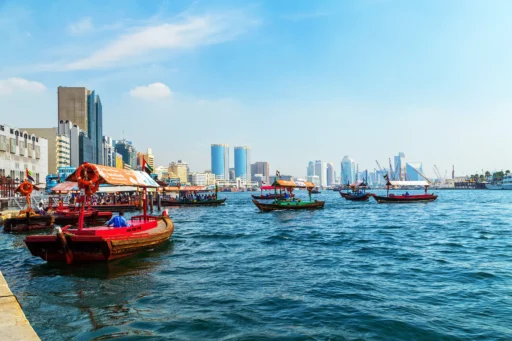
With the advent of modern steel-hulled container ships in the late 20th century, the commercial role of the wooden dhow became obsolete. However, instead of disappearing, it underwent a final evolution: from a tool of commerce to a symbol of heritage. Today, dhows are celebrated. They are the stars of heritage races like the prestigious Al Gaffal race in Dubai. They are beautifully restored as floating restaurants and luxury private yachts. Master shipwrights are now employed by cultural foundations to preserve the craft, building dhows not for trade, but for ceremony and memory.
Conclusion: An Enduring Icon
The dhow’s journey is a powerful allegory for the UAE. It represents resilience and adaptation. It carried the people through the hardship of the pearling age, adapted to the first waves of modernization with the engine, and has now been enshrined as the beloved symbol of a proud maritime past. The dhow’s graceful form, whether seen in a museum, a race, or silhouetted against a modern skyline, remains an enduring icon—a timeless reminder of the sea, the wind, and the skilled hands that built a civilization upon them.